
Lahore, Service and the Sikh Panth
From the study of Sikhism at Dera Sahib to service in the wider Panth, Prithipal Singh’s early public life developed through scholarship, language and practical seva.
Scholarship Put Into Service
After becoming known as Prithipal Singh, his work increasingly moved beyond personal study. The surviving accounts describe him taking part in Sikh affairs, using his Arabic and Persian knowledge where it was needed, travelling for Parchar and serving Sikh institutions.
A Wider Responsibility
The previous chapter documented the emergence of Prithipal Singh as a travelling Parcharakh. This chapter follows the next stage: his involvement in specific Sikh institutions and community matters.
Professor Himmat Singh’s biographical account states that Sant Syed Prithipal Singh helped in settling the dispute surrounding Gurdwara Shahid Ganj in Lahore. His own later writings provide a much more detailed account of how his knowledge of Arabic became relevant to that case.
Historical Service
His work became connected with specific Sikh historical and institutional matters rather than remaining only within the lecture hall.
Language Knowledge
His knowledge of Arabic gave him an ability that became particularly relevant when Arabic documentary material entered the Shahid Ganj litigation.
Service to the Panth
The published biography describes him as dedicating his life to the service of the Sikh Panth.
The Shahid Ganj Dispute
Gurdwara Shahid Ganj in Lahore became an important episode in Sant Ji’s public service. The biographical introduction to Taajudin’s Diary states that he helped settle the dispute surrounding the gurdwara.
Sant Ji’s own later account provides additional detail. He recalled being at Chak Number 26/2 when Giani Gurmukh Singh Musafir, then General Secretary of the SGPC, asked whether he could understand Arabic.
Arabic Documents in the Shahid Ganj Case
According to Sant Ji’s own recollection, Arabic documents had been submitted in the ownership litigation and were difficult for those involved in the case to understand. His Arabic knowledge was therefore sought for assistance in examining the material.
When His Earlier Education Became Useful
This episode is particularly significant in understanding Sant Ji’s contribution because it connected two parts of his life that might otherwise appear separate.
As Mushtaq Hussain, he had received Islamic education and developed knowledge of Arabic and Persian. As Prithipal Singh, he had become a student and preacher of Sikh teachings.
At Shahid Ganj, according to his own account, his earlier language training became a practical resource for Sikh institutional work.
His earlier scholarship was not left behind when his public identity changed; it became part of the knowledge he brought into Sikh service.
Interpretive summary based on Sant Ji’s autobiographical account and the biographical introduction.From Lahore to Wider Sikh Service
Lahore and Early Sikh Service
Following his study at Dera Sahib and Khande di Pahul, Prithipal Singh began his life of Sikh Parchar and community service.
Travelling Parchar
Family recollections describe him travelling between towns and gurdwaras and speaking about Guru Nanak’s teachings.
Shahid Ganj Service
The biographical record connects him with the Shahid Ganj dispute, while his own recollection explains how his Arabic knowledge became relevant to the case.
Amritsar
Family recollections record 1940 as the year in which the family finally settled in Amritsar after years of movement.
Patiala
The family moved to Patiala in 1946, a city that later became closely associated with Sant Ji’s public name.
Wider Panthic Work
Professor Himmat Singh’s biography records Sant Ji working with Akali Kaur Singh in India and abroad.
Service Was Not Confined to One Place
The family recollections describe a long period in which Sant Ji had no fixed home. His Parchar took him between towns and gurdwaras, while his family eventually settled in Amritsar and later Patiala.
This mobility is an important part of understanding the scale of his work. His public role was built through repeated contact with sangat rather than through a single permanent institution.
A Network of Sangat
- Town-to-town lecture tours.
- Gurdwara-to-gurdwara Parchar.
- Public discussion of Guru Nanak’s teachings.
- Participation in Sikh community affairs.
- Use of Arabic and Persian scholarship in historical and documentary work.
Working With Akali Kaur Singh
Professor Himmat Singh’s biographical introduction records that around 1950 Sant Syed Prithipal Singh worked with Akali Kaur Singh in India and abroad.
The source does not provide enough detail in the relevant passage to reconstruct every activity undertaken during this period. The archive therefore records the association without adding an unsupported list of achievements.
A Wider Horizon
His work was no longer limited to the local gurdwara circuit and was becoming connected with wider Panthic activity.
India and Abroad
The biography specifically records his work with Akali Kaur Singh both in India and outside India.
Continuing Seva
This period prepared the ground for the later international dimension of his Sikh service.
Gurdwara Ghat Sahib, Ropar
The biographical account later places Sant Ji in service at Gurdwara Ghat Sahib in Ropar.
Sant Ji’s own autobiographical preface gives this location particular importance. He wrote that he had the good fortune to write his autobiography at the sacred and peaceful Gurdwara Ghat Sahib at Nangal, Punjab.
“I have the good fortune to write my autobiography at this sacred and peaceful Gurudwara Ghat Sahib (Nangal, Punjab).”
Sant Syed Prithipal Singh Ji, autobiographical prefaceGhat Sahib therefore represents more than another place in his travels. It became one of the places associated with his written legacy and the preservation of his own memories.
Sant Syed Prithipal Singh Ji
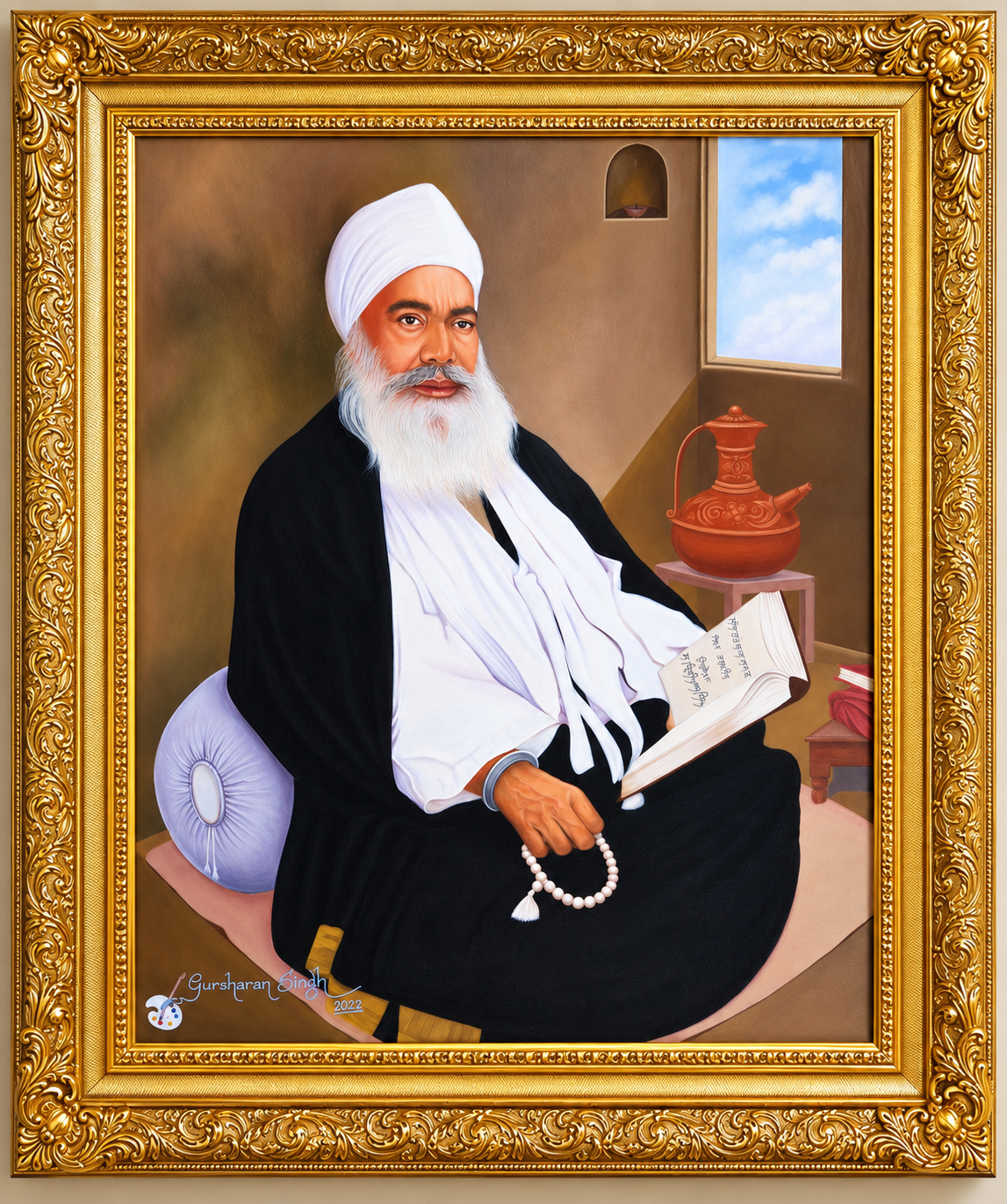
By this stage of his life, the name Sant Syed Prithipal Singh had become associated with scholarship, Parchar and service to the Sikh Panth. His earlier identity and education remained part of the intellectual foundation of that work.
What the Archive Can Document
✓ Shahid Ganj
The published biography connects Sant Ji with efforts relating to the Shahid Ganj dispute in Lahore, while his own account describes his involvement with Arabic documents in the case.
✓ Arabic Scholarship
His earlier Islamic education is documented in his autobiographical material and helps explain why his language knowledge was relevant to the Shahid Ganj matter.
✓ Around 1950
Professor Himmat Singh records his work with Akali Kaur Singh in India and abroad around 1950.
✓ Ghat Sahib
The sources record his later service at Gurdwara Ghat Sahib and Sant Ji himself identifies Ghat Sahib at Nangal as the place where he wrote his autobiography.
From Panthic Service Toward International Parchar
By the middle of the twentieth century, Sant Ji’s work had developed beyond the early lecture tours that followed his initiation.
His service now included historical matters, documentary interpretation, institutional work and collaboration with other Sikh figures.
The next major stage would take this work outside India. The biographical record later places Sant Ji in Britain, where his Parchar and organisational work became part of the developing Sikh community in Southall.
From the towns and gurdwaras of Punjab to the Sikh communities beyond India, the geographical reach of Sant Ji’s service continued to expand.
Transition to the international period of the biographySources for Chapter 8
Principal Sources
- Sant Syed Prithipal Singh, née Mushtaq Hussain Shah, Taajudin’s Diary , edited and translated by Inderjit Singh. This is the principal published source for Sant Ji’s autobiographical material.
- Professor Himmat Singh, “A Brief Biography of Sant Syed Prithipal Singh” , included in the published edition of Taajudin’s Diary. This account records the Shahid Ganj service, work with Akali Kaur Singh, Ghat Sahib and later international activities.
- Sant Ji’s autobiographical chapter concerning Gurdwara Shahid Ganj , included in Taajudin’s Diary. This provides Sant Ji’s own recollection of the Arabic documents involved in the case.
- Professor Mohinder Pal Singh Bedi, “My Recollections of my Father” . This family source provides the chronology of travelling Parchar, Amritsar in 1940 and Patiala in 1946.
Archive methodology: Claims are presented according to the surviving source record. Where a source gives a broad description but not enough detail to reconstruct an event fully, this chapter does not add unsupported details.
Historical material presented for preservation, research and educational purposes. “`