
From Mushtaq Hussain to Prithipal Singh
Lahore became the next great stage in his search for truth. At Dera Sahib, the search that had begun with a manuscript in Medina moved toward direct study, service and initiation into the Sikh tradition.
A Journey From Inquiry to Commitment
The surviving accounts describe Lahore as a decisive stage in Mushtaq Hussain Shah’s journey. After encountering material about Guru Nanak in Medina and continuing his investigation, he travelled to Lahore with his wife and son. There he studied Sikhism more directly and came into contact with Giani Achhar Singh at Gurdwara Dera Sahib.
The Road Toward Lahore
The published biography describes Mushtaq Hussain as becoming increasingly dissatisfied with the religious questions he was encountering. After his experiences in Arabia, he decided to leave for Lahore with his wife, Gulzar Begum, and their son.
Lahore was an important centre of religious, intellectual and Sikh life. For Mushtaq Hussain, it provided an opportunity to investigate Sikhism not only through written material but also through direct contact with Sikh institutions and scholars.
From Mirpur
His family background was rooted in the Mirpur region of Kashmir. His earlier life had been shaped by Islamic scholarship and a distinguished family tradition.
To Lahore
Lahore became the place where his investigation of Sikhism moved from books and manuscripts toward direct engagement with Sikh teachings and community.
He Did Not Stop With One Tradition
The biography included in the published edition of Taajudin’s Diary says that, after arriving in Lahore, Mushtaq Hussain initially studied the Arya Samaj tradition and then Christianity before turning his attention more deeply toward Sikhism.
This part of the story is significant because it presents his journey as an investigation rather than an instantaneous change of identity. He was examining different religious ideas before concentrating his study on Sikhism.
“Finally, he researched Sikhism carefully at the gurdwara built at the site of Guru Arjun Dev Ji’s martyrdom.”
Biography of Sant Syed Prithipal Singh, published in Taajudin’s DiaryAt the Shrine of Guru Arjan Dev Ji
In Lahore, Mushtaq Hussain began visiting Gurdwara Dera Sahib, the historic gurdwara associated with Guru Arjan Dev Ji and the place of the Guru’s martyrdom in 1606.
According to the published accounts, this became an important place of learning for him. His earlier study of Guru Nanak’s travels had brought him to Sikh thought intellectually; Dera Sahib gave him an opportunity to encounter Sikh teachings, scripture and the Sikh community directly.
It was here that he came into contact with Giani Achhar Singh, who later became known as Singh Sahib Achhar Singh.
The Path Toward Khande di Pahul
The published biography records that Mushtaq Hussain made repeated appeals to Giani Achhar Singh to be admitted into the Sikh fold. The eventual initiation became the decisive transition in his recorded life story.
From Seeker to Sikh
Return and Continued Search
Mushtaq Hussain continued to investigate the questions raised by his study of Guru Nanak and eventually moved toward Lahore with his family.
Study of Sikhism
He studied Sikhism and began visiting Gurdwara Dera Sahib, the historic site associated with Guru Arjan Dev Ji’s martyrdom.
Meeting Giani Achhar Singh
His contact with Giani Achhar Singh became an important part of his transition toward Sikh initiation.
Khande di Pahul
The surviving sources place his Khande di Pahul during the 1930s. Two published accounts give different years, which the archive preserves separately below.
When Did He Take Khande di Pahul?
The historical record available to this archive contains an important discrepancy concerning the exact year of Mushtaq Hussain’s Khande di Pahul. Rather than selecting one date without qualification, this digital archive records both accounts.
Two Dates in the Surviving Sources
4 Jeth, 1935
The biography included in the published Taajudin’s Diary states that Mushtaq Hussain became a Sikh on the fourth of Jeth in 1935 after persistent appeals to Giani Achhar Singh.
1933
In his recollections of his father, Professor Mohinder Pal Singh Bedi states that his father came to Lahore Dera Sahib in 1933 and took Khande di Pahul with his family from Singh Sahib Achhara Singh.
Archive position: Until an earlier primary document, contemporaneous record or other independent evidence resolves the discrepancy, this website should describe the initiation as occurring in the early-to-mid 1930s, while recording the two specific source claims above.
Mushtaq Hussain Becomes Prithipal Singh
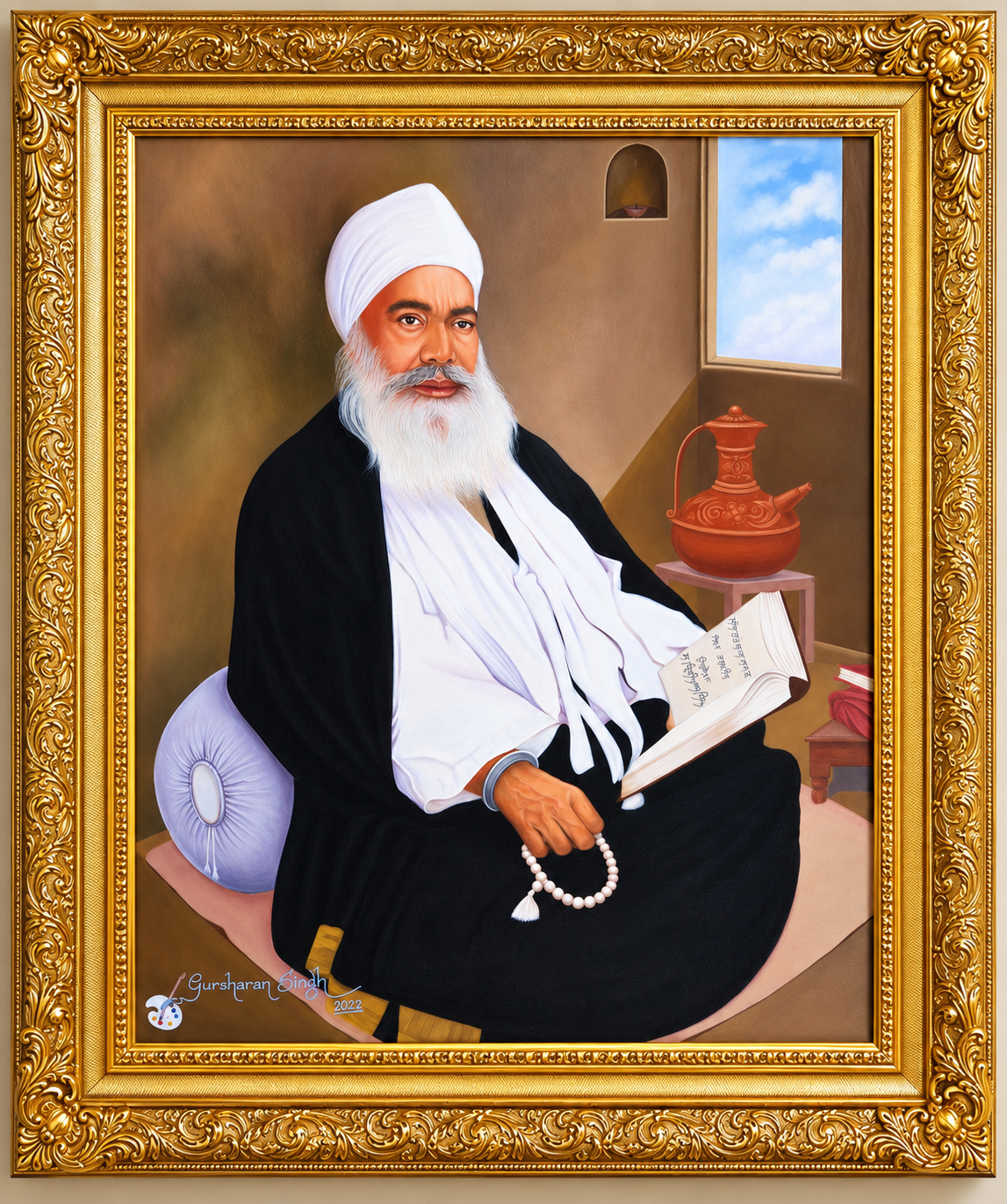
The published family recollection describes a clear change in identity following Khande di Pahul. From this point, the man previously known as Syed Mushtaq Hussain Shah was known as Prithipal Singh.
Later sources refer to him as Sant Syed Prithipal Singh and Sant Syed Prithipal Singh Patiale-wale. The name became associated with his subsequent work as a Sikh scholar, speaker, preacher and sevadar.
His Family Shared the Transition
The family recollections included in the published material indicate that Mushtaq Hussain’s transformation was not an isolated personal event. His wife and son accompanied him on this journey, and later recollections describe the family as joining him in the transition to Sikhism.
This is an important part of the archive because it shows that the story was also a family journey. The later identity of Prithipal Singh developed within a household that experienced the transition together.
“From then on he was called Prithipal Singh instead of Syed Mushtaq Hussain Shah.”
Professor Mohinder Pal Singh Bedi’s recollections, included in Taajudin’s DiaryFrom Student to Sikh Scholar
His earlier education in Arabic and Persian became an important part of his later contribution. Secondary accounts describe Prithipal Singh as a Persian-Arabic scholar who began learning Punjabi in the Gurmukhi script and developed into a Kathakar, explaining Gurbani to Sikh congregations.
This development would eventually allow him to communicate Sikh teachings using the languages and intellectual traditions with which he was already familiar.
His life therefore did not simply represent a change of religious identity. His previous scholarship became part of the way he approached and communicated Sikh thought.
Gurdwara Dera Sahib, Lahore
Dera Sahib occupies an important place in this chapter because it represents the point where Mushtaq Hussain’s intellectual search came into direct contact with the Sikh tradition.
The published biography specifically connects his study of Sikhism with the gurdwara built at the site of Guru Arjan Dev Ji’s martyrdom and identifies Giani Achhar Singh as the person from whom he eventually received Khande di Pahul.
What This Chapter Can Safely Establish
✓ Lahore
Published biographical accounts place Mushtaq Hussain in Lahore with his family and describe his subsequent study of Sikhism there.
✓ Dera Sahib
The sources specifically connect his study of Sikhism with Gurdwara Dera Sahib, the historic site associated with Guru Arjan Dev Ji’s martyrdom.
✓ Giani Achhar Singh
The published biography identifies Giani Achhar Singh as the Sikh authority from whom Mushtaq Hussain received Khande di Pahul.
⚠ Exact Year
Two surviving accounts give different dates — 1933 and 1935. The archive therefore preserves both rather than presenting one as conclusively established.
The Beginning of Prithipal Singh’s Public Service
The transition at Dera Sahib marked the beginning of a new chapter. The man who had spent years studying Islamic scholarship and investigating the life and message of Guru Nanak now began developing a public role within Sikh life.
Later sources describe him as a scholar, Kathakar, speaker and preacher. His knowledge of Arabic and Persian became particularly valuable when discussing Guru Nanak’s travels in the Islamic world.
The following chapters of this archive will therefore move from the story of his conversion and initiation toward his emergence as a Sikh scholar and public Parcharakh.
Sources for Chapter 6
Principal Sources
- Sant Syed Prithipal Singh, née Mushtaq Hussain Shah, Taajudin’s Diary , edited and translated by Inderjit Singh. The publication contains the biographical introduction and family recollections used for this chapter.
- Professor Himmat Singh, “A Brief Biography of Sant Syed Prithipal Singh” . This account gives the date of Khande di Pahul as 4 Jeth, 1935.
- Professor Mohinder Pal Singh Bedi, “My Recollections of my Father” . This family recollection places his father’s arrival at Lahore Dera Sahib and Khande di Pahul in 1933.
- Sikh Bulletin, November–December 2012 . This secondary account also reports the Lahore, Dera Sahib and Giani Achhar Singh portion of the story.
- Barusahib — “How a Muslim Man turns into a Baptised Sikh, inspired by Sikhism” . This secondary account follows the 1935 date given in the published biography.
Historical note: This chapter deliberately records the 1933 and 1935 accounts separately. Further archival research may establish which date is supported by contemporaneous documentation.
Historical material presented for preservation, research and educational purposes. “`