Chapter 2: Childhood & Early Education
The formative years of Mushtaq Hussain Shah and the educational foundations that shaped the scholar he would become.
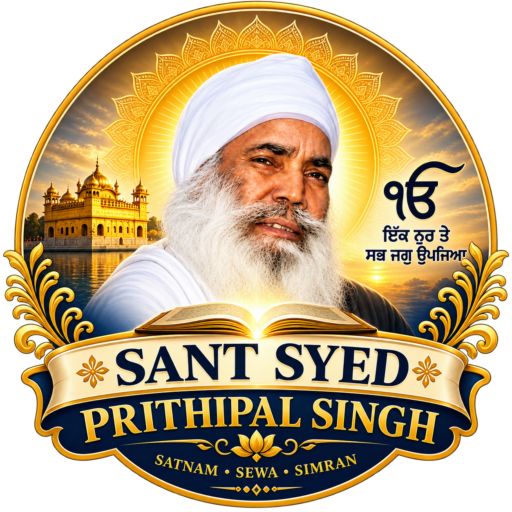
Before the world knew him as Sant Syed Prithipal Singh Ji, he was known as Mushtaq Hussain Shah. His early years were rooted in the religious and intellectual environment of his family in Kashmir. The education he received during this period became an important foundation for the scholarly journey that followed.
Growing Up as Mushtaq Hussain Shah
Mushtaq Hussain Shah grew up in a family whose background was closely associated with religious learning and scholarship. His father, Pir Muzaffar Hussain Shah, was described as a scholar and Pir, while his grandfather, Pir Bakur Ali Shah, held a prominent position in the administration of Kashmir.
The surviving accounts do not provide a detailed day-by-day record of Mushtaq Hussain’s childhood. For that reason, this chapter does not attempt to reconstruct events for which the available sources provide no evidence.
Instead, the archive follows the documented path: his family background, his religious education, his later Islamic scholarship and the intellectual preparation that preceded the extraordinary journey of 1927.
Early Life at a Glance
The Formation of a Scholar
Education became one of the defining features of Mushtaq Hussain Shah’s early life. His later autobiographical account records that he graduated as a Moulvi from Darul Uloom Deoband. This places his development within a tradition of formal Islamic scholarship.
His own account also states that he trained in naturopathic medicine at Azam Khan’s Tibbia College in Delhi. His intellectual interests therefore extended beyond religious study into another field of learning.
These details are important because they help explain the scholarly character that became visible in his later writings and public religious work.
Islamic Scholarship
His autobiographical account records his graduation as a Moulvi from Darul Uloom Deoband.
Religious Learning
His upbringing was connected with a family tradition of religious learning and scholarship.
Medical Training
He also recorded training in naturopathic medicine at Azam Khan’s Tibbia College in Delhi.
A Mind Shaped by Learning
The early Mushtaq Hussain Shah was being prepared through education for a life centred on knowledge. His later writings demonstrate familiarity with Islamic religious literature and with Arabic and Persian scholarly traditions.
This intellectual foundation would become particularly significant when he travelled with his father to Makkah in 1927.
In Medina, according to his own recollection, he studied Hadith and made use of the library there. It was during this period that he encountered a handwritten manuscript concerning Guru Nanak.
The young scholar who entered the library in Medina was searching within a world of Islamic learning. What he encountered there would open a new chapter in his search for historical and spiritual truth.
Photograph & Family Archive
Add an authenticated photograph from the family or archival collection.
The date and provenance of the photograph should be recorded whenever known.
Original Documentary Record
Sant Syed Prithipal Singh’s Own Account
One of the most important sources for this period is Sant Syed Prithipal Singh Ji’s own autobiographical account published in Taajudin’s Diary.
In that account he identifies himself as Mushtaq Hussain Shah and records aspects of his family, education and journey to Makkah and Medina.
📖 Open Documentary SourceEvidence & Historical Record
The archive distinguishes between what is recorded directly by Sant Syed Prithipal Singh Ji and what is supplied by later biographical or family accounts.
First-Person Evidence
His autobiographical account records his name, family background, Islamic education, training and journey to Makkah and Medina.
Family Evidence
Family recollections provide additional context concerning his ancestral background and later development.
Published Biography
The biographical introduction published with Taajudin’s Diary provides additional chronological context.
Important archival principle: The surviving sources do not provide a complete narrative of every event in his childhood. This chapter therefore avoids inventing details that cannot presently be documented.
The Road Toward 1927
Mushtaq Hussain Shah
He grew up within a family associated with religious scholarship and public service.
Islamic Scholarship
His own account records his later graduation as a Moulvi from Darul Uloom Deoband.
Medical Training
He also recorded training in naturopathic medicine at Azam Khan’s Tibbia College.
Journey to Makkah
Mushtaq Hussain accompanied his father on the pilgrimage to Makkah. The journey would lead him to Medina and to a manuscript that changed the direction of his life.
The Threshold of a New Journey
By the time Mushtaq Hussain travelled towards Makkah and Medina, he was already a person formed by years of religious and intellectual learning.
His journey in 1927 was therefore more than a physical pilgrimage. According to his own account, his time in Medina brought him into contact with a handwritten work that mentioned Guru Nanak.
The discovery would become one of the defining moments in the story of his life. It is the subject of the next chapter.
Sources for Chapter 2
1. Taajudin’s Diary
Sant Syed Prithipal Singh, née Mushtaq Hussain Shah
(1902–1969), edited and translated by Inderjit Singh.
The publication contains his autobiographical
material together with biographical and family
recollections.
2. Sant Syed Prithipal Singh’s autobiographical
account
The first-person account records his family
background, education, training and journey
towards Makkah and Medina.
3. Professor Himmat Singh’s biography
The biographical introduction published with
Taajudin’s Diary provides additional
context for the development of Mushtaq Hussain
and the later transformation of his life.
From Education to Discovery
The foundations of Mushtaq Hussain Shah’s early life prepared him for a journey that would take him from Kashmir to Makkah and Medina — and eventually towards a profound encounter with the historical tradition surrounding Guru Nanak.